Writing down your feelings is a great way to process your anger. Writing can help you to heal primary emotions like anger and vulnerability. It can also help you to process and heal hurt parts of yourself. You should take at least 5 minutes a day to write. Often, just writing your thoughts out is enough to get things off your chest. Here are some examples of writing down your feelings:

Meditation

Anger is a very powerful emotion. Anger can make you do terrible things, not only to yourself, but to others as well. But when you learn how to deal with anger through meditation, you'll find that anger doesn't have to take over your life. Anger is just what you need for the practice. So how do you start? Listed below are several tips:

Exercise

Physical activities such as walking or running can help you release negative energy and calm your mind. Before you start an exercise routine, however, it is important to consult a physician to make sure that you are healthy enough to do so. If you have a physical condition, it is also essential to consult a personal trainer or other medical professional. Walking or running can help you release negative energy while keeping your mind focused on the beauty of nature. You can also practice breathing exercises and use affirmations to clear your mind.

Therapy

Therapy for dealing with anger is helpful to improve your emotional intelligence and help you make better decisions when triggered by anger. It can also help you learn to recognize signs of arousal and reduce reactivity. By learning to recognize the signals, you can develop new ways to deal with anger, improve your relationships, and learn to deal with anger in a constructive way. Listed below are some techniques used in therapy for dealing with anger.

Writing stuff down

Write stuff down. It may seem like a small step, but writing your feelings down on paper can be therapeutic. Whether you're angry at yourself, at someone else, or at a situation, writing it down can help you process your anger and reduce its impact on your life. It can also help you understand why you're feeling the way you do. You can then see what you did to cause your anger, and work to minimize the negative effects on yourself and others.

Time-out

In the event of an angry outburst, calling a time-out can be beneficial. It gives everyone involved in the situation a chance to cool down and think before responding to the other person. It can be as simple as taking a deep breath or even doing some mindfulness exercises. As you are calling a time-out, you should also plan an explanation of the situation. You should be clear and open about your plan and what will happen if you don't follow it.


Something feels terribly off all of a sudden. You suspect that you could be letting go of control. You experience physical symptoms that resemble serious medical conditions, and you occasionally experience a sense of impending death or catastrophe.

Over time, the sensation gets stronger. It becomes too much to handle. You experience an intense moment of absolute terror, as if this is your last time on earth, and then it vanishes mysteriously.

It's possible that the symptoms you experienced were as severe as a heart attack. However, it's more likely that what you experienced was an anxiety attack. Anxiety attacks are acute bursts of pure anguish that result in tangible physical symptoms and generate devastatingly intense anxiety.
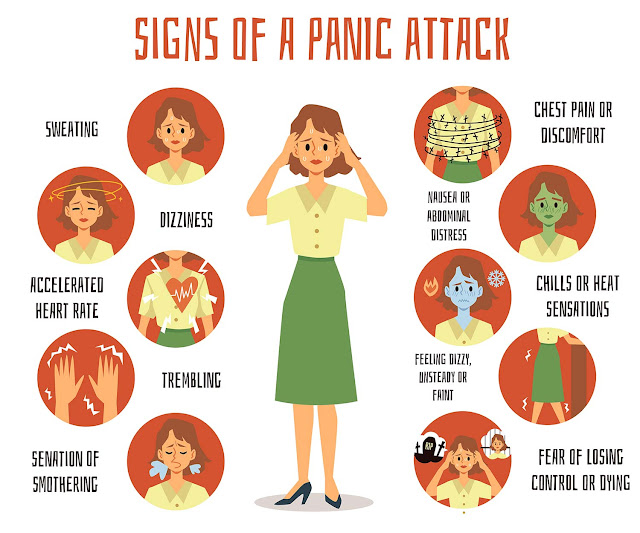
image credit: simplypsychology.org

An Introduction to Anxiety Attacks and Panic Attacks

Because anxiety attacks are not a psychiatric concept, different people may have slightly different definitions of them. However, anxiety attacks and panic attacks are frequently used interchangeably (or as a way of referring to lighter versions of panic attacks that are a bit less debilitating but still very troublesome).

A panic attack is a brief episode of extreme anxiety that lasts for only a few minutes, typically around ten. You frequently go through a variety of physical and mental symptoms during an anxiety attack, which can leave you feeling terribly scared and exhausted afterward. These consist of:

Other strange symptoms that are frequent during an anxiety attack and all add to the panic are common. Anxiety attacks often peak around 10 minutes in and then gradually subside over a few hours, leaving the victim exhausted, agitated, and occasionally wondering what went wrong.

Also read: How to Deal With Anxiety Attacks

Rarely are these panic episodes only apprehensive or anxious feelings. They include intense physical and mental activity. People who have never experienced a panic attack may not always be aware that they are experiencing one. Some people have their first anxiety attack in such a way that they need to call the hospital because they fear the worst.

What Triggers an Anxiety Attack?

Anxiety attacks are distinctive in that they can occur at times of extreme stress or terror or for no apparent reason at all. The first anxiety attack frequently occurs when a person is under a lot of stress in their life (although not always). Future panic attacks, however, could be brought on by nearly anything:

Once more, this is because anxiety attacks can seem and feel so irrational, therefore not everyone who experiences them is aware of or thinks they are experiencing an anxiety attack. Due to how challenging it is to feel as though one's anxiety attacks are actually happening, those who experience panic attacks too frequently may even begin to develop additional anxiety disorders, such health anxiety.

However, not everyone who experiences one anxiety attack will experience another. Some people only have anxiety attacks when they are extremely stressed out, exhausted, or when they are in a risky position. You might have a panic attack, for instance, if you nearly had a vehicle accident, but only because your anxiety was unbearably high at the time.

However, a lot of people who experience panic episodes do so again. Depending on the person.

What Do Anxiety Attacks Feel Like?

Because anxiety attacks are so physically intense, people frequently mistake them for serious illnesses, and in certain situations, they can even make people feel uneasy about their health. For many people, having an anxiety attack is similar to having one of the following diseases:

If an anxiety attack occurs just once, the person may learn to deal with it and their worries about a health issue may go away. Others may have anxiety attacks that are so intense that develop major health anxieties that necessitate hospitalization or multiple doctor appointments.

Noting that only a doctor can rule out more serious problems, there is no harm in consulting a doctor to get a medical opinion on the causes of your experiences and to get some peace of mind. But take note that it can be quite challenging for a doctor to persuade you that you are healthy if you experience anxiety episodes. The only way to get relief from anxiety attacks is frequently to treat them.

Alternative: Anxiety Attack Definition

As we noted before, the phrase "anxiety attack" refers to a very strong episode of anxiety rather than a medical condition. For the sake of simplicity, the majority of people, including some medical experts, refer to panic attacks as "anxiety attacks." When you say "panic," most people immediately picture someone fleeing from Godzilla. People typically grasp it better when you refer to it as "anxiety attacks."

However, not everyone uses the phrase "anxiety attack" in the same way because it is not a medical term. Some people refer to extreme symptoms of different anxiety disorders as "anxiety attacks" in order to describe their experience. For instance, people with obsessive-compulsive disorder may experience "anxiety attacks" when they come across a trigger that causes them to get deeply engrossed in their compulsions. When an exam is coming up at school, students may refer to their intense nervousness as a "anxiety attack," despite the fact that they are really just talking about being really apprehensive.

Also read: How to Manage Social Anxiety

Remember this when individuals talk about having an anxiety attack because the term could cause some misunderstanding. However, for the sake of this post, we'll focus on panic attacks because they are a very real, very prevalent anxiety problem that the majority of individuals mean when they claim to experience these attacks.

Why Do Anxiety Attacks Cause These Physical Symptoms?

The fact that anxiety attacks frequently result in physical symptoms that resemble those of more serious illnesses is one of the main reasons why they are such a terrifying experience. Many people have extreme health anxiety as a result of this since they don't think anxiety could possibly create such a physical reaction.

Hyperventilation is the most frequent physical response that anxiety may induce, and it can explain the majority of the anxiety symptoms.

What is hyperventilation?

Your body needs oxygen to survive, and when that oxygen is depleted in the bloodstream, it converts it to carbon dioxide, but your body also needs a healthy quantity of carbon dioxide in your circulatory system. Hyperventilation is the process of breathing either too quickly or improperly so that you are exhaling too much carbon dioxide and inhaling too much oxygen.

It's interesting to note that at this period, you can feel as if you're not breathing enough, and your natural inclination might be to take deeper breaths. However, by trying to inhale more oxygen in response to that sensation, you are really exacerbating your hyperventilation. For this reason, people who attempt to take deeper breaths frequently experience their symptoms getting worse, which adds to their anxiety.

You experience the signs of an anxiety attack when your blood doesn't contain enough carbon dioxide, including:

Observe how each of these sensations is the same as when you have acute anxiety; this is why the symptoms frequently feel so bodily and the condition frequently feels like a "attack." They reinforce one another to provide the impression that something is seriously wrong.

Overbreathing, a typical reaction to anxiety, is the most likely cause of hyperventilation. However, it's not the sole reason. Additionally, you might experience excessive breathing because:

Therefore, although the most frequent cause of hyperventilation is rapid breathing when under stress or anxiety, it is not the only one.

Anxiety-related hyperventilation is not harmful. All that needs to be done for your body to feel balanced again is wait for the anxiety episode to pass. However, anxiety symptoms do seem scary when they occur, which is why so many people feel a surge of fear and panic.

Also read: How Much Does a Nurse Practitioner Make?

Other Causes of Anxiety Attack Symptoms

Another factor contributing to the symptoms of an anxiety episode is hyperventilation. Your body may feel highly odd sensations as a result of stress and anxiety, which frequently vary from person to person. Anxiety and tension may make some people feel as though they are unable to lift their heads or that something is wrong with their brain.

Furthermore, anxiety often makes the brain hyper-aware of experiences that would otherwise be normal. Because of over-sensitization, your mind is so attuned to your body that it pays attention to very minute sensations that a person without worry would ordinarily dismiss.

Last but not least, anxiety attack symptoms itself can potentially be a trigger. Although the etiology is unknown, it is probably psychosomatic in some way (caused by your mind).

How to Control an Anxiety Attack

Once an anxiety attack has begun, it can be challenging to stop it, but there are methods for lessening its intensity. Try the following if you think you're experiencing or about to have an anxiety attack:

Once they begin, anxiety attacks are very difficult to stop, but by following the advice above, you can lessen their intensity. The less frightening and easier to manage your panic attacks are, the less severe they need to be.

Anxiety Attack Prevention

You'll need to take action to stop them once your anxiety episodes are more under control. Although an anxiety attack may only happen once, it is nevertheless a sign of a more serious anxiety disorder, and many patients discover that their episodes start to reoccur frequently.

Prevention is about three things:

A excellent place to start is always the doctor. To feel more at ease with your health, ensure that you've had a thorough physical. Try to avoid using panic attack drugs, though, as the majority have side effects including extreme exhaustion and others that make them unsuitable for everyday usage.

Start working out as well. Exercise is a proven stress reliever and one of the best strategies to reduce daily worry. Additionally, it's a beneficial approach to retrain your breathing. Running can help your body relearn how to breathe properly since it forces your body to breathe as efficiently as possible.


If you're wondering how to deal with anxiety attacks, you've come to the right place. In this article, you'll learn some effective techniques for dealing with panic attacks. These include avoiding certain triggers, practicing muscle relaxation techniques, and avoiding alcohol, caffeine, and smoking. These strategies can help you cope with anxiety attacks and make life a little easier for yourself. In addition, you'll learn how to visualize a situation that is both familiar and comfortable.

Avoiding specific triggers

While avoiding specific triggers can help alleviate the symptoms of anxiety, this strategy can also make the situation worse. If you're prone to anxiety attacks, avoiding specific triggers could reinforce your feelings of fear. If you want to avoid anxiety attacks, consult a mental health professional to find out what to do instead. Many treatments for anxiety include exposure therapy, which involves slowly exposing the person to the source of their anxiety and teaching them how to control their reactions to it.

Practicing muscle relaxation techniques

There are several different methods for muscle relaxation. Progressive muscle relaxation is a type of exercise you can practice anywhere, anytime. This method involves tensing and releasing small groups of muscle groups in sequence, starting with your toes. This exercise is effective for reducing tension throughout your body and calming anxious thoughts. Practicing muscle relaxation techniques for anxiety attacks is an excellent way to manage these anxiety attacks.

Avoiding caffeine, alcohol and smoking

Although alcohol, cigarettes, and caffeine provide a temporary feeling of relief from anxiety, they have long-term negative effects. While alcohol, cigarettes, and caffeine all cause a surge of sugar in your body, these substances can increase the intensity of your anxiety and make your anxiety symptoms worse. Smoking, on the other hand, provides some immediate relief due to the nicotine receptors, but these substances can actually make your anxiety worse in the long run.

Visualisation

When it comes to tackling anxiety, visualization is a great way to help yourself. Visualisation involves using your imagination to envision a specific situation. For instance, you might see a big red stop sign on an empty street. Or you could visualize a clear blue sky overhead. It all depends on what you want to focus on. If you want to use visualisation as a way to deal with anxiety attacks, try to choose a relaxed environment and set aside at least five to fifteen minutes each day.

Keeping a diary

Keeping a diary is a helpful tool in dealing with anxiety and panic attacks. Writing down your thoughts can help you identify triggers and patterns. It can also help you identify what is triggering your attacks and what to do differently next time. Below are some ways to keep a diary to deal with anxiety attacks. Read on to discover more! (Update: We added a third way to deal with anxiety and panic attacks).

Practicing grounding breathing

While anxiety is a natural reaction to danger and stress, it can become a crippling condition if you're not able to control it. Your body's "fight, flight, or freeze" response is triggered by two brain regions: the amygdala and hypothalamus. These regions respond to the threat by releasing hormones such as cortisol and adrenaline, causing a host of symptoms such as heartbeat, breathing, and sweating.


Everyone experiences social anxiety at times. But going about your daily business can be particularly difficult if you have social anxiety disorder (also known as social phobia). In social situations, you might have a great deal more self-consciousness and fear than other people do, and you might also have low self-esteem.

But resist the urge to let fear prevent you from living fully. The disorder of social anxiety can be treated in a number of ways. In order to feel better and get through the day, try these seven suggestions. Additionally, be aware that some people may require professional assistance to overcome their social anxiety.

1. Maintain Breathing Control

Uncomfortable physical changes might be brought on by anxiety. For instance, you might start breathing quickly and shallowly. You may feel even more worried as a result. You can experience tension, vertigo, or suffocation.

You can control your breathing and other anxiety symptoms by using specific techniques. To start, try these:

  1. Straighten your back and take a comfortable seat.
  2. Let your shoulders drop.
  3. Grasp your chest with one hand and your belly with the other.
  4. For four seconds, inhale slowly through your nose. Your hand on your stomach will rise, whereas the hand on your chest shouldn't move much.
  5. Hold your breath in for 2 seconds and then slowly let it out through your mouth for 6 seconds.
  6. Repeat this a few times to induce relaxation.

2. Try progressive muscle relaxation or exercise.

According to research, engaging in physical activity like running can help you manage your anxiety. Also useful is progressive muscular relaxation. This entails tensing and relaxing specific muscle groups in your body while focusing on the sensation of the release.

You can relax by practicing yoga. Some of them include deep breathing, which can help lower your heart rate and blood pressure. According to studies, practicing yoga for a few months can help reduce general anxiety. In fact, even one lesson can help with anxiety and mood.

3. Prepare

You can feel more secure if you prepare ahead of time for social situations that make you uncomfortable. Some situations could make you feel the want to stay away from them because they give you anxiety. Instead, make an effort to get ready for the future.

If you're going on a first date and worried that you won't have anything in common, for instance, try reading magazines and newspapers to come up with a few conversation starters. Do some breathing or relaxation exercises to help you relax before you leave the house if attending a party or business event brings on symptoms.

4. Start Small

Don’t jump into big social situations. Schedule restaurant meals with friends or family members so you can get used to eating in public. Try going out of your way to make eye contact with people on the street or at the grocery store and say hello. If someone starts a conversation with you, ask them questions about their hobbies or favorite places to travel.

As you become more comfortable, you can progress to increasingly difficult activities.

Don't be too hard on yourself. Fighting social anxiety requires patience and practice. You don't have to immediately confront your greatest phobias. Taking on too much too soon may actually make you feel more anxious.

5. Take Yourself Out of the Picture

Instead of focusing on your thoughts, try to pay more attention to what is going on in the world around you. You can accomplish this by paying attention to what is being said or by telling yourself that others probably can't tell how worried you are just by glancing at them. Concentrate on being present and a good listener since people like it when others act sincere and interested.

6. Respond to unfavorable thoughts

These ideas may even be automatic and may be related to particular persons or circumstances. They are typically in error. However, they could make you misinterpret things like facial emotions. You might come to believe that people are thinking things about you that they aren't because of this.

To accomplish this, you can just use a pen and piece of paper:

  1. Consider all the unfavorable ideas you have about certain circumstances.
  2. Put them on paper.
  3. Confronting negative thoughts with good ones should be written down.

Here’s a broad example:

  • Negative thought: “This situation makes me so anxious, I won’t be able to deal with it.”
  • Challenge: “I’ve felt anxious before but I’ve always gotten through it. I’ll do my best to focus on the positive parts of the experience.”

7. Employ Your Senses

Your senses—sight, hearing, smell, touch, and taste—can help you relax when you're feeling worried. Some folks find that viewing a favorite image or inhaling a particular perfume works. Try your favorite song, a tasty piece of gum, or cuddling with a pet the next time you start to feel nervous about a social event.


If you're thinking about how to write a cover letter for submitting with your resume, you've probably wondered how to address the letter. Here are some simple rules you should follow: Address the letter to the hiring manager by name, start with a memorable opening line, and avoid abbreviations. Address the letter to the hiring manager by first and last name, and be sure to be friendly and relevant.

Simple rules

When writing a cover letter for a resume, the best way to convey your intentions is to focus on what the company needs. Avoid using personal details as this will invite unconscious bias from the hiring managers. Instead, focus on your skills, experience, and professional goals. When including personal information, make sure it matches what is on your resume. Furthermore, never lie or misrepresent your qualifications. This information will be discovered during a background check.

Examples

While the resume is the document that highlights your previous experience, your cover letter is where you show your future goals and plans. Think of it as a bridge between your past and your future, outlining what you want to accomplish and how you can get there. In today's competitive job market, you must show your prospective employer that you are not only capable of doing the job, but that you are also passionate about your chosen profession.

Format

The format of a cover letter for a resume can be different for each position, but it is necessary for any applicant. It should introduce the applicant and highlight why they are writing. Often, it's helpful to include the company's mission statement and goals, and describe how the applicant fits into their overall vision. The cover letter should be tailored to the position in question, and highlight your qualifications and experiences that make you an excellent fit for the company.

Addressing the letter to the hiring manager

If you are applying for a job online, you can address your cover letter to the hiring manager by contacting the company directly. When you call the company, state the purpose of your call and ask to speak to the hiring manager. Be sure to spell the name correctly - some names are spelled differently than how they are pronounced! If you can, make your call brief and polite. The hiring manager may not be willing to talk to you if you come across as pushy.

Storytelling in a cover letter

A cover letter sets the stage for your professional identity. Telling a story about your professional experience can help you stand out and highlight the skills, attributes, and experiences that you think will make you the best fit for the job. Whether you are applying for a sales position or a marketing role, storytelling in a cover letter can help you highlight your key qualities and skills. This article will cover three ways to use storytelling in a cover letter.

Using emotion in a cover letter

One of the first mistakes you should avoid in a cover letter is focusing on your personal experiences. Instead of listing facts about your previous work experiences, focus on how these experiences have shaped you. For example, if you worked as a project manager for a global company, you can mention that you successfully launched new products in different countries. You could also highlight your experience developing marketing campaigns that adapted to local customs.

Avoiding common mistakes

A cover letter is less important than a resume, but it should be professional in appearance. You have about half a page to convince the reader that you're a good fit for the job. Making common mistakes while writing a cover letter can seriously hurt your chances of getting the job. Here are some mistakes to avoid when writing your letter:


There are several rules when it comes to writing an abstract. You need to use proper APA style, avoid abbreviations, and write the abstract as a block of text. The body of the abstract should be one paragraph in length, double spaced, and the margins should be one inch on all sides. It is also acceptable to include a short paragraph that includes keywords. However, you should not include too many abbreviations or too many figures or tables.

Also read: How to Write a Research Paper

Informational abstracts

If you're unsure how to write an abstract, consult the APA Manual of Style to get the gist. The following tips will help you structure your abstract and avoid common mistakes. The first paragraph should state your objective, questions, methods and results, and summarize the discussion and recommendations. Use a comma to separate each sentence and avoid using too many sentences. The abstract should not exceed 200 words.

First, remember that the abstract reports the content of the paper, not the paper itself. It should not contain any opinions or details that are not in the paper itself. Use clear, simple language that is easy to read. Don't use excessive amounts of vocabulary or fillers. Also, remember that the abstract is designed to be read by the reader, so make sure it's as short as possible. Use active voice instead of passive, and avoid adjectives.

In addition to the title, the abstract should have a running head. Include a heading titled "Abstract" on every page. Underneath the title, the abstract should contain keywords. Make sure that the keywords are specific and represent the content of your paper. If possible, include keywords that are related to your paper's topic. The keywords are important to help readers find your work.

Also read: How to Write a Two Weeks Notice Letter

Avoiding abbreviations

APA style guidelines recommend that you avoid using e.g. and i.e. in a text citation, even though they are commonly used. Instead, you should use et al., which stands for et al., and does not require italicization. Moreover, if you cite more than one author, you should spell out their last names rather than abbreviating them.

The standard convention is to avoid abbreviations in an abstract, except when the acronyms are used to refer to a single term in the text. However, in some cases, it is difficult to avoid using abbreviations in full. It is best to use acronyms only if they are generally understood, and if they are repeated several times in the text, they must be defined. This is to avoid ambiguity for readers and ensure that readers understand the meaning.

APA style guidelines also recommend that you use apostrophes instead of hyphens in order to avoid ambiguity. Generally, apostrophes are used in contractions, and in the possessive case. Moreover, in APA Style, apostrophes should not be used to create plural numbers. For example, "CV" stands for curriculum vitae. While it can be confusing to write the abbreviation "CV", it will be easier to spell it out as CVs.

Also read: How to Write a Formal Letter

APA style

If you've ever wondered how to write an abstract in APA style, you've come to the right place. First, you should understand the purpose of an abstract. It summarizes the main points of your paper. The goal of an abstract is to capture the reader's attention, not convey information that isn't directly relevant to the paper's topic. However, in order to make it successful, it must be brief and concise. Here's how to write an abstract:

APA style requires the title of the paper be centred at the top of the page. The title should be under 50 characters, but a space should follow each. Next, you should center the word "Abstract" on the top of the page. Use the capital "A" for the first letter of the abstract, and lower-case "A" for the remaining letters. Make sure to include the APA style manual's guidelines when formatting the abstract.

When composing an abstract, it is important to keep the formatting consistent. The abstract paragraph should have a single-word title in block format. The lines should be flush with the left margin. The abstract should be a paragraph, and the page should be double-spaced. Under the body text, students can include a brief paragraph of keywords. In addition to the title, the abstract should contain no more than 50 words, and should be double-spaced.

Also read: How to Write a Persuasive Speech


If you want to receive mail in a timely manner but don't want to give out your actual physical address, you can use a post office box. This type of address is specialized for daily mail and can reduce the risk of identity theft. If you're wondering how to write a PO box address, read on! The following guide includes images to help you get the hang of it. Listed below are some helpful tips to help you get started.

Post office boxes are designed for daily mail

The purpose of a post office box is to receive and deliver mail to and from homes. There are five main sizes available: standard, medium, small and large. They are generally available at post offices all over the country. Each one should be large enough to hold the daily mail, and the flap should not block the carrier. The post office box must also be large enough to accommodate US Priority Envelopes without folding.

These boxes are usually mounted in a wall of a post office. They may be installed on an external wall, or in the lobby. Staff working on the inside deposit mail into the mailbox and key holders can open the box from the lobby or outside the building. If you use your own mailbox, make sure it is installed according to the USPS' regulations. If you have questions, contact your local Postmaster. The dimensions of the mailbox must be suitable for daily mail volume, as determined by the USPS.

Also read: How to Write a Cover Letter For a Resume

They allow you to keep your physical address private

Many privacy laws require businesses to provide a physical address to customers and prospective clients. By law, a business must include a business phone number, email address, and a physical address to be considered legitimate. But PO Box addresses are a great way to keep your physical address private. They are also accepted for legal documents. While PO Boxes are not the same as virtual addresses, they can be useful in certain circumstances.

A PO Box is also more secure than a traditional mailbox, since your mailing address is not tied to your physical address. Generally, you can expect privacy from a PO Box. Businesses can also use this service for direct mail assets because it doesn't require the recipient's name. All that's needed to open your PO Box is a code or key. Once you have signed up for a PO Box, your mails will be sent to the address.

They reduce the risk of identity theft

The US Postal Service offers a convenient way to change the address of a box. You can fill out a form online or contact the USPS directly to report any illegal use of your address. The more information you provide, the more likely they are to trace the perpetrator. They may even ask you for personal information, such as your credit card number or other sensitive data. By following these simple steps, you can help reduce the risk of identity theft.

Many identity thieves can obtain personal information about a person using a mailing address that is not their own. These thieves may get access to this information from a variety of sources, including public trash bins at banks and social agencies. Even private mailboxes can be a target for identity thieves. Keeping your personal information private is important. Stopping businesses from sharing your personal information is also essential, as is keeping your financial situation under close scrutiny.

Also read: How to Write a Strong Conclusion for an Essay

They are easy to rent

Renting a Post Office Box (P.O. Box) is a simple process. It allows you to receive mail without using your home address. The cost for a P.O. Box is $100 per year, and you can choose a different address if you work from home. Generally, you can choose a size that works best for you. You will need to print out and fill out a Form 1093 to apply for the service. You can also find out the cost of renting a PO Box by searching online.

Another reason to rent a PO Box is for security. The US Post Office has rules that make stealing mail an illegal activity. You should never give out your home address to a stranger, so you need a secure place to store it. Using a PO Box will help you stay protected from porch pirates who swipe packages off doorsteps or porches. The key that unlocks the mailbox will prevent thieves from stealing your mail.


To manage time, you should learn to focus on a single task and know what is going to come next. If you find yourself multi-tasking too easily, limit your distractions and take intentional breaks to refocus your mind. Avoid multitasking at all costs and set a time limit on each task to avoid a time crunch. You will be glad you did when you can finish everything before you run out of time!

Setting SMART goals

The idea of setting SMART goals to manage time is fairly new. This concept was introduced in 1981 by George T. Doran, a consultant and former director of corporate planning at the Washington Water Power Company. These goals are well-defined objectives with the four S's: specific, measurable, achievable, relevant, and time-based. Setting SMART goals will increase the likelihood of your success. You can also use a cloud-based tool called Smartsheet to help you plan, manage, and achieve your goals.

SMART goals are more challenging than ordinary goals. They require more effort and dedication. If you're nervous about setting goals, you might want to consider hiring a Results Coach to guide you through the process. Remember, SMART goals are only attainable if you're consistent and take small steps to achieve them. And if you don't feel up to the task, you can always go back to your original goal.

Also read: How Long Does It Take to Get a Passport?

Creating a to-do list

Creating a to-do list can be a great way to better manage your time. Instead of listing tasks in a chaotic way, you can turn your list into a running roll call of your accomplishments. Make sure that you put a deadline for each task and write down the estimated amount of time needed to complete it. When making a to-do list, you should also assign ratings to each task. One is a high priority, and five is a low priority.

Having a to-do list is a great way to set goals and stay on top of them. If you don't have a clear understanding of what you want to accomplish, a to-do list can help you break them down into bite-sized tasks. Then, when you reach these goals, you will feel more confident and successful. It's a great way to stay on top of important projects and make sure that you're making progress on them.

Avoiding the urge to multitask

Managing your time effectively means not allowing yourself to be tempted to multitask. Setting clear due dates for all tasks is an effective way to prioritize your priorities. Moreover, knowing which tasks are most important and which ones don't will help you avoid the temptation to multitask. It is better to prioritize one task at a time than to juggle many tasks, which will only slow down your productivity.

Trying to accomplish several tasks at once is a recipe for distraction. You must focus on one task at a time. Doing multiple tasks will cause your brain to divide its focus, which in turn will lead to sloppy work. To avoid this, try a 20-minute rule. The goal is to work on one task at a time. If this isn't possible, divide your tasks into smaller chunks.

Creating a time limit for a task

Creating a time limit for a particular task helps you schedule your time and work effectively. If you have a specific amount of time to spend on a particular task, you will be less likely to take time away from other activities to complete it. This productivity tip is particularly useful if you plan a long task or project. Using a timer can help you set a clear limit for yourself and keep you focused on completing it.

Also read: How to Manage Stress at Work

Prioritizing tasks

When you're managing your time, prioritizing tasks is an essential tool for productivity. By learning how to prioritize your tasks, you'll learn to tackle important tasks first. By using different criteria to rank tasks, you'll know which tasks are most important to complete first and which can wait until the end of the day. As an added bonus, this approach will also help you make more informed decisions about when to start larger tasks.

Using the Eisenhower matrix as a tool to prioritize tasks is an effective method. Instead of labeling tasks according to their priority, you can use the first three letters of the alphabet, A, B, or C, to organize your time. Next to each item, write a number. The higher the number, the higher priority it is. Once you have prioritized all tasks, it's time to do them in order.

Also read: How to Work Out at Home


Learning how to manage stress at work can make the difference between success and failure. Excessive work stress can ruin our physical and emotional well-being. While we can't control the environment we work in, we can control our own personal lives. Listed below are some tips to help you handle the stress at work. Follow these tips for managing stress at work and you'll be on the way to success. Let's get started.

Keeping a journal

Keeping a journal can help you overcome the stresses of your daily life. It can help you sort through your thoughts and identify recurring themes. It can also help you identify the people and situations that cause you stress. A journal can also help you to find ways to improve your relationship with family and friends. It can help you maintain your mental health and balance. Keeping a journal can improve your life and your work life in a number of ways.

One of the most effective ways to cope with stress at work is to write about it. You can include the symptoms of stress that you experience, as well as your assessment of the underlying causes. A diary may also help you identify ways to prevent these events from recurring or becoming stressful in the future. By keeping a journal, you can also manage your stress at work and live a happier and more fulfilled life.

Prioritizing tasks

The most effective method of prioritizing tasks is to create a master list. This allows you to evaluate tasks objectively and ensure that the work done is of high quality. You can also create a master list on a document to keep track of important tasks. The list will be helpful for balancing tasks and meeting deadlines. After creating a master list, you can divide it into subtasks to manage time wisely.

When it comes to managing work-related stress, it's crucial to know how to prioritize your workload. The task descriptions should clearly state how much time is involved. If you can identify the tasks that depend on each other, you'll have an easier time creating a schedule that can keep you on track. Remember, trying to do everything at once may result in incomplete tasks. Prioritizing your work based on the time it takes to complete each task is essential to ensuring you're not overwhelmed with work-related tasks.

Keeping distance from negative thoughts

If you're struggling to deal with work-related stress, you're not alone. According to the American Institute of Stress, the number of people who experience work-related stress has reached epidemic proportions. Recognizing the reality of work-related stress is essential to reducing the negative effect it has on your life. By accepting negative thoughts as part of life, you can learn to be mindful of the present moment.

A common mistake people make is engaging in reactive thinking, which is an automatic reaction to stressful situations. In this state, you tend to react to negative thoughts in a way that will reinforce the negative thinking. Instead of responding to negative thoughts, try turning on your "observer" mode and asking yourself questions about them. This will help you calm down and get perspective on the situation at hand. When you switch back into "observer" mode, your body will be in a relaxed state and you'll find it easier to stay focused on the task at hand.

Distancing yourself from co-workers

If you have a co-worker who causes you daily stress, you should try to find a new job. There may be a better one out there for you. If you can't live with this person, you should consider switching jobs. You'll likely be happier working in another industry. But how do you know what kind of new job to get? First of all, it's essential to understand that stress isn't contagious in the traditional sense.

Avoid gossip. While you're at work, avoid gossiping. This may lead to automatic judgments and feelings of guilt. Try to maintain relationships with friends and family. This can help you cope with stress and burnout. However, you should remember that a relationship at home can make you feel better. Try not to share your work life with co-workers, if you can't change jobs.

Keeping a relaxed workspace

There are many benefits of having a relaxed workspace at work. Not only will it improve employee productivity, but it will also lower stress levels. It can also promote a positive mental state. A workspace with relaxing music with a soothing ambiance will help your employees feel more at ease. The atmosphere should be pleasant enough to encourage employees to relax and unwind. However, if you're not sure whether you can make a change in the workspace, try a few ideas to help you decide.


how to manage icloud storage

Managing your iCloud storage space is easier than you might think. In this article, we will go over how to manage iCloud storage space and which options are available to you. You can also learn how to back up your data to iCloud. You can easily manage your iCloud storage space in the same way that you would manage other files on your computer. Whether you use iCloud for your photos, videos, or documents, you will need to understand the different options available.

iCloud Drive

There are a number of ways to manage iCloud storage. If you have more data than your storage can handle, you can upgrade your storage plan. You can also delete files or reduce the size of your iCloud photos. Here's how. First, navigate to the iCloud menu in your Mac's system preferences. Next, select "iCloud storage." From here, you'll see the size of the data that you have available. To free up more space, delete files that are no longer needed and reduce the size of iCloud photos.

Managing iCloud storage on your Mac can be done individually or in the context of multiple devices. You can also choose to manage iCloud storage with Family Sharing. Open the Apple icon in the upper left-hand corner of your desktop. Select "System Preferences," or type "iCloud" into the Spotlight search box. Then, select "More" in the iCloud window. Click "Manage Storage" to see details and insights about your iCloud storage.

Once you've deleted the files or folders that you're not using, you can manage the amount of space available for iCloud backups. The next step in reducing backup space is to delete files. Tap "Delete backup data." This will delete any backup data in iCloud and free up more space for new ones. Similarly, you can delete media, such as photos, videos, and documents, by deleting them.

iCloud Photos

If you want to save more space on your iPhone, you can use the iCloud storage platform. Its platform lets you save photos in the original resolution and format, and it allows you to add up to 500GB of storage to your iPhone for free. Once you have enough space, you can purchase a storage plan starting at $0.99 per month, and you can easily upgrade your plan from any device. The process is automatic and does not require any user input.

One of the best ways to manage iCloud photos is to delete them, or to download them. The first step is to enable Photos Stream, which can be done by enabling the option in the Settings app. Turning it on is simple and will give you access to all your photos. However, if you are only interested in deleting a few photos, you should disable the Photo Stream feature on all your devices. Alternatively, you can manually manage your iCloud photos by deleting them or stopping the backup of various applications.

To delete multiple photos, you can select them individually and then click the trash icon. Note that the photos will be deleted from iCloud storage as well as from your device. To delete all photos, you must first disable the service in the Apple ID settings. Once you do this, you will be able to delete all photos on your device and from your cloud storage. To delete individual photos, you can also go to the Settings menu on your iPhone. Click on Photos and select iCloud. Toggle iCloud Photo Library to the off position.

iCloud Backup

To manage iCloud storage, head to Settings > iCloud and choose the iCloud option. It will show you the amount of storage space available, including the size of your backup. You can also see what applications are stored on the storage. Choose the backup option and look at the list of backup files. If you no longer need the backup files, you can delete them. If you'd like to disable iCloud, you can do so as well.

In addition to managing your iCloud storage, you can upgrade your plan. Apple offers five GB of free space when you first sign up. You can also choose to buy additional storage, which will be automatically billed to your Apple ID. It is a good idea to understand what is using the most space on your storage. This way, you'll be able to find the best iCloud storage solution. After all, you can always upgrade your storage plan at any time.

To delete iCloud backups, you need to know how to configure your iCloud settings. On an iOS device, you can choose whether to backup to iCloud or to your computer. To delete a backup, you can choose to confirm your action. It's important to keep the most recent backup. However, you can delete older backups as well, if you want to free up space on your phone.


Hypertension is the most common ailment in the western world and can result in a variety of symptoms including chest pain, shortness of breath, numbness, and vision changes. If not treated, hypertension can lead to organ damage. Fortunately, there is a cure! Read on to learn how to cure high blood pressure in 3 minutes and get the benefits! You can start by following the tips below.

Breath control therapy

A new study suggests that breathing at a controlled rate for 15 minutes can cure high blood pressure in under 3 minutes. Researchers conducted the experiment on subjects with essential hypertension and controls. They found that slow breathing was associated with lower systolic and diastolic blood pressure, decreased RR interval and improved baroreflex sensitivity. The results showed that controlled breathing reduced systolic and diastolic blood pressure in the hypertensive subjects and was equally effective in controls.

Breath control is an effective method for lowering blood pressure. This method has many benefits, including improving heart health and reducing the risk of cardiovascular disease. Breath control exercises are simple and convenient to learn and can even be done in the privacy of your own home. If you have any type of blood pressure condition, you should try breathing exercises that can improve your health and reduce your risk of cardiovascular disease.

Avoiding salty foods

One of the easiest ways to lower your blood pressure is to cut down on your intake of salty foods. Although salt is necessary for nerves and the heart, too much can raise your pressure and contribute to heart disease. You can find salt in a variety of unexpected places, such as meats, crackers, frozen meals, soups, pickles, and cheese. If you're not aware of this, you can make substitutions by reducing your salt intake through cooking.

It's tempting to reach for a midnight snack, which can provide a boost of energy, but you may be contributing to your high blood pressure by eating the wrong kinds of snacks. Even though low-fat or high-protein snacks are good for you, they still contain a lot of sodium. To make it easier, you can make a healthy smoothie with berries and low-fat milk.

Walking

Many people wonder whether walking can cure high blood pressure. In fact, it can. Walking for three minutes three times a day has been shown to lower both systolic and diastolic blood pressure levels. It also lowers the heart rate. But what exactly does walking do to your body? Read on to find out! And if you can't walk for that long, you should try walking for 30 minutes per day!

The study included 296 subjects with baseline SBP above 120 mmHg. The subjects completed a six-month walking program. During that time, there was no adverse outcome, and the time devoted to walking each week increased steadily. At the end of the study, the subjects' walking time reached 300 minutes per week. It should be noted that 119 subjects were still taking antihypertensive medications. The SBP levels of fifty-eight subjects were higher than 140 mmHg, and the remaining thirty-eight were between 120 and 129 mmHg. Although no antihypertensive medications were changed during the study, adherence to walking during the study period was similar.

Avoiding sodium

Sodium is found in processed foods, including soups, sauces, baked goods, breads, and salad dressings. Even those labeled as "low sodium" can still contain too much sodium. Other sodium-laden foods are barbecue sauce, tomato sauce, ketchup, and salad dressings. Try to keep your sodium intake to less than 1,500 mg a day. You can also eat plenty of fruit and raw vegetables for snacking. Unsalted nuts and legumes are also good snacks.

The American Heart Association recommends that you consume less than 2,300 milligrams of sodium per day. That's about half of the recommended daily allowance for most adults. Cutting back on your sodium intake by about 1000 mg per day will have a significant impact on your blood pressure and heart health. Table salt contains around 40 percent sodium by volume, and if you can cut down on the amount you consume, it will be much easier to stick to this diet. Fortunately, most processed foods contain very little sodium naturally. Most sodium is added during processing.


Hypertension is an extremely common condition, but it is also a genetic risk factor for heart disease, stroke, and kidney disease. Knowing your risk and taking preventive measures can help you avoid health problems in the future. Please keep in mind that the information contained in this article is not intended to replace professional medical advice. You should always seek medical advice. The information presented on this page is for educational purposes only. It is not intended as a substitute for medical treatment. By continuing to use this website, you agree to our terms and privacy policy.

Slow breathing reduces stress

The practice of slow breathing reduces stress and lowers blood pressure by activating the parasympathetic nervous system. It lowers blood pressure, relaxes the body, and slows digestion. It is also beneficial for the heart and the brain, as it trains the body to respond calmly in stressful situations. The benefits of slow breathing are well documented in scientific research. If you're interested in learning more about its benefits, read on.

Researchers have suggested that the exercise of slow breathing can lower blood pressure and reduce stress by reducing the amount of heart rate that the patient experiences. Researchers have shown that slow breathing improves the responsiveness of cardiac sympathetic and parasympathetic systems. The authors suggest that a decrease in cardiac-related BP pulsatility may benefit cerebral circulation. It is also believed that this exercise may influence the structure of white matter and the development of multiple sclerosis.

Herbal medicines lower blood pressure

One in three American adults suffer from high blood pressure. If left untreated, high blood pressure can lead to serious health issues, including stroke, heart attack, and even death. Thankfully, there are many effective treatments available, including herbal medicines. In addition to taking medication, you can lower your blood pressure with lifestyle changes such as a healthy diet and physical activity. Below are a few examples of herbs that can help you lower your blood pressure:

Alcohol can raise your blood pressure and increase your risk for cardiovascular disease. To reduce your risk of developing high blood pressure, limit your alcohol intake to two drinks per day. For men, this amount should be limited to fourteen drinks per week, while for women, the limit is nine. In addition to alcohol, you should quit chewing tobacco, smoking, or using any other habits that raise your blood pressure. Smoking and tobacco use can permanently damage the artery walls, increasing your risk for heart attack and stroke.

Diet

High blood pressure is one of the most common health issues that affect Americans today. If left untreated, it can lead to heart disease, stroke, and kidney disease. Fortunately, there are several natural ways to lower blood pressure without drugs. Listed below are some of the best foods to lower your pressure instantly. They may not immediately lower your pressure, but they will significantly lower it over time. By making these changes to your diet, you will see dramatic improvements in your health.

While most people assume that they can lower their blood pressure at home, this is not true. In fact, the most effective way to lower your blood pressure is to visit your doctor, who knows exactly what lifestyle changes are most effective. Your doctor will provide you with customized feedback based on your overall health picture. This way, you will know what changes are realistic for you. In addition, you will get advice from a professional about the right foods to eat to lower your pressure.

Exercise

Exercise reduces blood pressure instantly. Studies have found that people with hypertension can lower their pressure in as little as ten minutes. However, not all exercise programs are the same. Some exercises cause adverse effects while others do not. Some people are more sensitive to the effects of exercise than others. For example, some people feel drowsy during exercise, while others may be irritable when they're exercising. No matter which type of exercise you choose, it is important to be aware of the risks and benefits before engaging in any form of exercise.

People with high blood pressure should be aware of their risk factors and work with their doctor to determine the right exercise routine for them. A common exercise is squeezing one finger. This exercise can reduce your systolic blood pressure by eight to 10 mmHg. However, it is important to consult a doctor before beginning a new exercise regimen, especially if you have a history of heart disease or high blood pressure. It is important to monitor blood pressure closely and follow the guidance provided by your doctor.

Handgrip device

The new handgrip device was developed by two researchers at GEHA. These two scientists found that lowering blood pressure in this way can lower the risk of heart attack, stroke, and premature death. However, these researchers do not recommend using handgrips as a standalone treatment for hypertension or high blood pressure. They also note that their device is more sophisticated than commercial models. According to them, lowering blood pressure will result in a 10% lower risk of death.

The handgrip exercise is easy to perform and can be done anywhere. Age and biological sex play an important role in lowering the risk of CVD. In addition, the handgrip exercise can be performed in any environment and is suitable for both men and women. Using this handgrip device can overcome barriers to exercise, such as lack of knowledge or space. Its effectiveness will be further proven when it is applied to elderly individuals, who are more susceptible to the onset of CVD.


The average salary of a nurse practitioner is $133,940 a year in The Empire State. This is almost 41 percent more than the average registered nurse without an advanced practice degree. The salary differential is even greater in New York, where there are approximately 14,850 nurse practitioners. In addition to this, a nurse practitioner can expect to receive continuing education credits and additional compensation. Here are some things to keep in mind when considering a career in nursing.

Average salary for a nurse practitioner

Despite the hefty wage tag, nurse practitioners are not all the same. Different states pay nurses differently, but the average salary for a nurse practitioner is higher in some places than others. In states such as California, Massachusetts, New Jersey, and Washington, nurse practitioners earn about $130,166 per year, on average. For those who are not willing to relocate to one of these states, there are other options. Check out this list to get a sense of what a nurse practitioner can expect.

The average salary for a nurse practitioner in New York City is $141,010 a year. While salaries vary based on location and prior experience, NPs typically earn more in states with higher population densities. New York NPs are also highly sought-after, and demand for them is forecast to increase significantly over the next five years. Their salaries are among the highest in the state. But where are nurse practitioners the best paid? New York is home to several internationally-renowned hospitals, including Mount Sinai Hospital, the New York-Presbyterian Hospital-Columbia University, and the NYU Langone School of Nursing.

Nurse practitioners in New York make an average of $133,840 per year. This is significantly higher than the average nurse practitioner salary in most other states. Nurse practitioners in New York earn nearly four-and-a-half times as much as registered nurses with less experience. The salary difference is larger than many other states, and the median salary for NPs in New York is $133,940. There are estimated to be 14,850 nurse practitioners in the state.

Variations in salaries by specialization

In the United States, nurse practitioners are employed in a variety of health care settings, including physician offices, outpatient care centers, medical specialists' offices, and schools. The salaries of nurse practitioners can vary significantly depending on experience and specialization. This guide offers a general guideline for starting salaries in different specializations and states. The pay scale below shows an approximate range between the 10th percentile and 90th percentile of a nurse practitioner's salary.

While nurse practitioners in all areas experience high stress levels, there are some specialties with higher rates of stress than others. For example, nurses working in the emergency room face high levels of stress, while those in a specialty such as geriatrics or pediatrics have lower levels of stress. The highest paying specialty for nurse practitioners is CRNA, which is considered a specialized field. However, nurses in emergency rooms may face the greatest challenges, including varying shift schedules and a long hours work environment.

Despite these differences, salaries for all three types of practice rose more rapidly in states with less restrictive SOP laws. The pay for these positions would naturally increase more rapidly in states with less restrictive laws, but it seems reasonable that the competition between NPs and MDs would result in higher wages for NPs. The substitution effect should therefore have a positive effect on MD salaries. The average salary for nurse practitioners in the United States is approximately $100,000. But the pay is not uniformly high. Some states pay more than others, so you should check salaries in the area you're planning to practice.

Continuing education for nurse practitioners

Continuing education for nurse practitioners can be provided through several different methods, including online courses, continuing education through the state's association of nursing, and live seminars and workshops. The Nurse Practitioner Associates for Continuing Education is a non-profit organization that offers educational courses for Nurse Practitioners and Advanced Practice Clinicians. The Association is comprised of nurse practitioners and advanced practice clinicians and provides educational programs for both nurses and doctoral students.

The American Association of Nurse Practitioners (AANP) provides continuing education for NPs through their online CE Center. Featuring more than 100 activities, this resource is free for members and is accredited by the ANCC. CE is offered in many formats, including interactive case simulations where participants can conduct virtual patient assessments and develop treatment plans. Other continuing education for nurse practitioners can be found in monthly publications of the association's academic journal and at multiple live conferences throughout the year.

Continuing education for nurse practitioners is mandatory in most states to maintain your nursing license and improve your skill sets. The exact requirements vary from state to state, but many employers include a stipend for continuing education as part of their benefits package. This incentive encourages nurse practitioners to pursue the highest-quality education possible. However, it can also help nurses who are looking for an extra income to go on vacation or take time off from work to continue their education.


If you are planning to teach English in South Korea, there are several factors you should consider. You should understand the cost of living in South Korea, and the requirements of getting a teaching visa. If you do not speak Korean, you may need to have your diploma apostilled or certified by a notary public.

Cost of living

Housing is the biggest expense in South Korea. While housing prices are not exorbitant, you should expect to spend 30 to 40 percent of your monthly salary on rent for a nice apartment. If you decide to stay in the larger cities, you can either opt to live in expat-centric high-rises or in small residential communities.

You should also be careful with how much electricity you use. While it costs as little as $5 for a few hours of usage in winter, it can easily cost you over $100 in summer. Make sure to conserve power by limiting how much AC you use and ensuring that it is not on the high end.

You can work in Korea if you know the language well. You should note, however, that you can only work up to 20 hours a week. You should note that the minimum wage in Korea is about 8590KRW, or $7.24 USD, at the time of this writing. However, the exchange rate changes often, so the actual amount will vary. The average monthly cost for a student living in Korea ranges between $800 and $1,200, depending on where you live and the activities you engage in.

Requirements

To start with, you should have a valid passport. This passport should be valid for a minimum of 12 months. It should also have two blank pages for the work visa. In addition, you must have a hard copy of your Bachelor's degree from an accredited college or university.

Teaching English in Korea requires an E-2 visa and a criminal background check. The EPIK also requires that you have at least 50 hours of TEFL practice. Full-time teachers usually work twenty to thirty hours a week. The class schedule is generally in the mornings and evenings. However, you can expect to have some time off in the afternoon.

Depending on your profile and level of experience, the average salary for teaching English in Korea ranges from $1800 to $2500 a month. In addition, taxation in Korea is only 5%. You can also receive subsidized or free accommodations in most places. Furthermore, you will receive ten to twenty days of paid vacation each year and fifteen to eighteen national holidays.

Best time to teach english in South Korea

There are two periods when teaching positions are most plentiful in South Korea. Public school positions are popular. These positions are usually nine to five, and actual teaching hours are guaranteed not to exceed 22 hours per week. The pay for public school positions varies depending on the area you are teaching in, but most public schools offer a decent salary. In addition to a small settlement allowance, public school teachers enjoy benefits such as free furnished housing, national insurance, and 18 days of paid vacation.

If you are planning to teach English in South Korea for a few months or even a year, be sure to apply early to avoid being turned down. There are numerous jobs available in different cities throughout South Korea. When choosing your teaching location, you should consider the cities that are most attractive to you. Seoul, for example, is a very popular city for foreign English teachers. It is a huge city with vibrant nightlife and a fast-paced, intense lifestyle.

English teaching contracts in South Korea have a set length, and most teachers in the same school will sign the same contract. The only difference is the pay, which depends on the qualifications and experience of the teacher. Generally, contracts in South Korea last 12 months and include a monthly salary, airfare, a free apartment, a pension contribution, and one month of severance.

Requirements for getting a teaching visa

The requirements of the E2 Visa have been stricter since 2010 when Korean Immigration instituted new rules around this visa. First, English teachers are now required to take a 'Self Health Test', in which they are tested for street drugs and mental health problems. This was introduced because some teachers had been arrested while teaching English in Korea. In addition, the Immigration department started screening teachers for stress and prescribed medication.

Teaching English in South Korea is a great opportunity for many people, and the job market is showing no sign of slowing down. However, it is important to make the most of your time there by doing a little research and finding the best teaching school for you. Recruiters will try to pressure you into signing up for a teaching job quickly, so take your time and do your research.

If you're planning on teaching English in South Korea, you should know that you need to apply for an E-2 teaching visa. This visa is designed for temporary teaching, and can be upgraded into a permanent teaching visa in the future. You must also be a native English speaker. Although most schools prefer North Americans, English teachers from other countries can also find work in Korea.


If you are planning a baby, you are probably already asking yourself some real questions. What will it cost, will I be able to breastfeed, and how will the baby look? Chances are you've asked your parents for their old baby photos. These are all valid questions. Having a baby is a wonderful dream, but it can also strain relationships and strain finances. So, how do you determine if you're ready?

Having a baby is a dream

Having a baby in a dream can symbolize a new beginning or transition in a person's life. It can also represent a new project, relationship, or idea. It can also symbolize success or growth in a project or goal. Additionally, a baby's type can represent an upcoming life change. If you dream about having a monster baby, it means you are making changes that will push you outside of your comfort zone or go against your plan.

Having a baby in a dream can be symbolic for a couple who is feeling overwhelmed by their current situation. If you're dreaming about creating a new life, you're probably feeling a great deal of stress, and need a break from your daily routine. Having a baby in a dream can also be a sign that your family is suffering from conflict and you need to work toward creating peace and harmony. The dream can also signal an opportunity to do something you've been afraid to do.

It costs money

As you may be aware, carrying a child is not cheap. Not only does childbirth require medical treatment and supplies, but it also involves the cost of food and vitamins. Depending on where you live and whether you have health insurance, these costs can be substantial. Although carrying a child is a fun experience, it can be a major financial drain. Fortunately, there are a few ways to prepare your family for these costs.

One way to cut down on the expenses is to purchase health insurance directly from the insurer. While the monthly premiums won't be as high as paying full price for delivery, it is a good idea to check for coverage exclusions. Most short-term policies don't cover pregnancy, so you'll have to pay full price to deliver the baby. To save money, consider buying a health insurance policy that covers pregnancy and childbirth.

It takes time

Before deciding to have a baby, it is best to consider the time it will take. Babies and toddlers need you. They will be dependent on you until they're around high school, and sometimes they won't even leave the nest right away. It is natural to feel overwhelmed and overloaded some days, but remember that your child's needs are not yours alone. Children are also known as clingers, and they can cause tension in your relationship.

During pregnancy, many moms nest. This means preparing the house for the new arrival, including freezing meals, stocking staples, and making the nursery as kid-friendly as possible. Many moms stockpile frozen veggies, pasta, and healthy cereals to eat until the baby arrives. Ensure safety by installing safety latches and plugs on electrical appliances, and make sure to remove sharp furniture and other potential hazards. Keep hazardous chemicals and flammable items out of reach of children.

It strains relationships

It strains relationships when you have a child for a number of reasons. Firstly, new parents have less time for themselves, sleep less and new responsibilities as sole provider. As a result, they may avoid discussions and feel bad about it. This can also affect their partner. If you are struggling to get a good night's sleep, you might find that your partner feels the same way.

In addition to being exhausted, new parents also have less time to spend with their partners than before. Their partners might feel left out, or resent being ignored when they aren't around. But the best way to avoid such a scenario is to spend time with each other and do little things to make each other feel involved. Once you have the baby, you can re-evaluate your roles.

It causes stress

While every woman experiences pregnancy differently, it is important to recognize your own limits. If you experience chronic worry, feeling hopeless, or are sleeping less than normal, you should consider seeing a doctor. Pregnancy can also cause anxiety or depression, which can impact both you and your baby. To manage your stress, you should learn to relax and take care of yourself. Read on for some tips to help you deal with your pregnancy.

See a GP if you are feeling stressed. Your GP will be able to give you general advice and refer you to a professional. A doctor, midwife, or obstetrician can help you navigate the emotional upheaval associated with pregnancy. Most hospitals have programs to help you cope with pregnancy-related stress. Your GP can also provide information about local resources for coping with stress.

Free How-To Tutorials

Search This Blog

Menu Halaman Statis